M is for Myrtle Beach
Being one of the places Digger calls home this quiet sometimes sleepy beach town makes a frequent setting for his books. Digger enjoys taking bits of reality and mixing them into his fiction books.


M is for Myrtle Beach
Being one of the places Digger calls home this quiet sometimes sleepy beach town makes a frequent setting for his books. Digger enjoys taking bits of reality and mixing them into his fiction books.
J is for Jimmigans
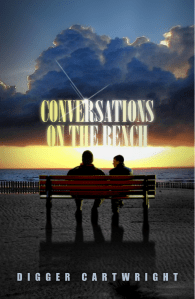
This is a local bar in Myrtle Beach, SC. There was a wood bench seated in the front of this bar; where many of the conversations between Robbie and Sebastian took place.
H is for Hope
Who really is Hope? Do we ever REALLY find out? Not really, one of the most obscure yet intriguing characters in any of Digger’s books.

G is for Greenbrier
This is where the Maynwaring Family calls home a 200,000-acre ranch stretched from the shores of Lake Tahoe south to Zephyr Cove and east to Hot Springs Mountain, encompassing a variety of terrain that included the High Sierra Mountains, lush timberland, fertile grazing and farmland, and desert.

F is for Feltus Boone La Mont
Feltus is the house detective at The Ocean Forest. He takes his job very seriously and will leave no stone un-turned in the process. Is everyone a suspect? Until you prove otherwise the answer is “Yes” to Feltus

Miss Matisse: Most people underestimate just how powerful social media marketing can truly be! It’s a great thing when you can market yourself, because you are the only one who really knows your product like the back of your hand, unlike anyone else. What else can we expect to see from Digger Cartwright in the near future besides the Money, Power, Greed, Sex and Revenge of Gems & Jewels?
Digger Cartwright: For the near future, I’ll probably continue with the Gems & Jewels series. That’s been on my mind for a while, and I’d like to finish Books II-V next. I’ll be doing a lot of commentaries for ThinkingOutsideTheBoxe.com, the think tank. I generally participate in their annual symposium in December and some of their quarterly champagne summits. You’ll be hearing my thoughts on politics, the economy, business and society. I’m in the process of developing a series of books that is a bit futuristic looking at what America and the world may look like in thirty years. I’m far from actually starting to write that, but that’s on the drawing board. I have plans for a sequel to The Versailles Conspiracy and The Maynwarings. Of course, time is always at a premium, so I’ll just take these projects one at a time. But I’ll say this, if you’ve liked what I’ve done so far, you’re going to love what I have planned. The best may be yet to come.
Miss Matisse: I am seriously laughing hysterically right now at your comment about someone worrying about another person living in their parents’ basement. It’s so true! Why care about what others think of you? Live your life! Speaking of yourself…What would you say has been the most successful way for self-promoting of your books?
Digger Cartwright: The world of social media and the internet are great ways to reach millions of readers and engage them. You can interact with people on Facebook and Twitter that are of like interests. You can reach hundreds of readers groups online who love to read indie authors’ work. You’re able to reach people all over the world online and with social media while you get lost in the shuffle on places like Amazon.com.
At the end of the day, there’s no better way to promote your work than word of mouth. You have a friend who reads the book and makes comments on their social media profiles. Their friends see it and they take an interest. They post something and so on and so forth. And of course, it always helps to have fair, impartial, and unbiased reviews by known or reputable reviewers, and there are plenty of them on Amazon and other places. These aren’t paid reviews; these are reviewers who consider various genres and my take an interest in your book to review. It always helps to have people who have bought your book on Amazon leave a comment or review or rating.
There’s really no one way that’s better than all the rest. It’s actually a combination of efforts that help expand the presence of the book and build an interest in it. Self-published authors should use all the tools at their disposal and that are financially available to promote their work. It becomes a lot easier once you gain a following, so make sure you engage with fans and keep producing quality work.
Miss Matisse: Yes, taking too much time off can throw you for a loop! If you have the time I’d add that as a writer you should jot down your ideas while you can so you don’t forget them later or as you go along. What advice do you have for others who are experienced, but struggling in the writing field/industry?
Digger Cartwright: I think a lot of people sit down to write thinking that they have the ability to do so. Writing isn’t easy. It’s very difficult to be creative, come up with a storyline, develop characters, and write a book that flows well, is coherent, and interesting. If you’re struggling with the writing process itself, get some mentoring or take some writing classes. There are plenty of resources available for aspiring writers to help polish their storytelling abilities which helps translate into increased opportunities for the book.
I like to have testers, for example. It has really helped me over the years. I run a storyline and synopsis by a group of people to see if it piques their interest. Once I have a draft of the story done, I’ll let them read it and see what they think. I welcome constructive criticism. They may come back with something that I hadn’t thought of as the author in terms of how it impacts the readers’ experience. In reality, the work product you’re putting out may or may not be interesting to the readers.
I always encourage aspiring writers to make sure they have great editors. Not every manuscript is going to be perfect. I have two or three editors read each book, and inevitably some things escape all of them—typos or incorrect references, etc. It’s human nature, but you’ve got to strive for perfection and produce a manuscript that is as flawless as possible. A manuscript filled with one mistake after another is not appealing to the readers. They’ll let the occasional typo slide, but if you’re work is overrun with mistakes, incorrect grammar, etc, they’ll not look favorably upon that and they’ll let you know about it.
And don’t let the critics get to you. You’re always going to have critics who won’t like what you do no matter what. Don’t let them get to you. Constructive criticism is something that you need to listen to and take seriously. Criticism from someone who has never written a book and who is just jealous of your accomplishment isn’t usually very valuable. Don’t let it get under your skin. You’ve got to have thick skin. If you’re worrying about satisfying someone living in their parents’ basement playing video games and criticizing your work, you’ll be your own worst enemy.
Miss Matisse: I totally agree with you! A writer does have to be in a certain mindset in order to produce their best work. Otherwise it can throw the whole story off! So…sticking with the same subject, have you ever made any mistakes in your field that you would like to advise others against?
Digger Cartwright: Stay productive. Keep writing. Don’t take too much time off between books. If you do, you’re likely going to become complacent and take your time before starting the next book. As soon as your current manuscript is with the editor, get to work on the next one. If you’re serious about writing, keep producing as much as you can without sacrificing quality while you can when you can. The day may come when you don’t have the time or the creative juices dry up. I find that if I take too much time off between books that it becomes more and more difficult to start the next one.
Miss Matisse: I happen to absolutely love that you keep your fans in mind while writing too! Your new series sounds like it’s going to be a big hit! When it comes to writing, have you ever had to overcome writers block? If so, how were you able to work around it?
Digger Cartwright: I will occasionally encounter writer’s block. For me, I have to be in the right frame of mind to sit down and write. I really have to be in the mood. When I’m in the zone, so to speak, I can just sit and crank it out. If I’m not in the zone, it’s tough; it’s very laborious under those circumstances. Where I often encounter writer’s block is that I create a situation while I’m working that impacts the direction I was taking. I have to work through the change and the implications for the storyline. I like to say I’ve worked myself into a corner and have to figure a way out. Usually it’s just a matter of stepping away for a while and letting it all work through my mind. Sometimes I’ll need to take a break, have something to eat, get some fresh air, go walk around, or even listen to some music. Really it’s just a matter of stepping away and clearing my mind. Once the answer comes to me, I’ll get focused and get back to work.
Ultimately, I think any writer really has to be in the right frame of mind to do their best work. I’ve read a lot of books in the recent past that seemed to indicate the author was trying to force the words onto paper and it came across as being of a lesser quality than their normal prose.
 Digger Cartwright